
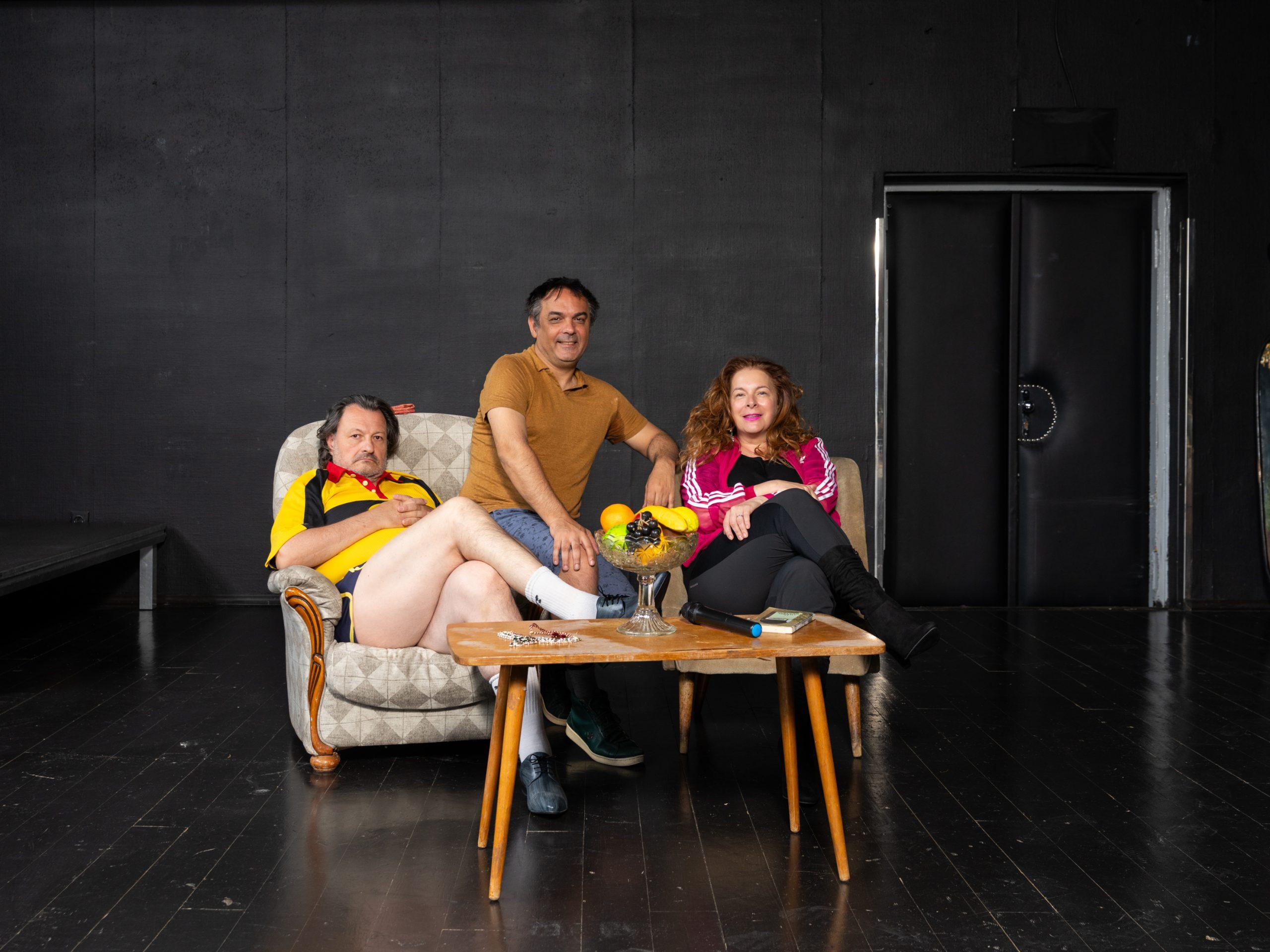
Miroslav Krleža: Glembajevi PROSE, Vol.2
- The performance takes place in the foyer of the &TD Grand Hall at 20 h
- Buy tickets at the &TD box office, open from 11:00 to 13:00 (except Sundays) and two hours before the performance starts, at https://www.ulaznice.hr/web/regular/18333798 and at their points of sale.
Premiere / 18.6. / foyer of the &TD Grand Hall / 20:00
Repeat performances: 19 and 20. 6. / 20:00
A project by Saša Božić, Jelena Miholjević and Borna Baletić
Adaptation: Saša Božić
Performed by: Jelena Miholjević and Borna Baletić
Co-production: De facto and Teatar ITD
Costume design: Marita Čopo
Lighting design: Tomislav Maglečić
production for de facto: Ivana Brajdić
After the first part laid bare the family’s cold genealogy, the authorial duo Saša Božić and Jelena Miholjević have joined forces with Borna Baletić to continue their exploration of Miroslav Krleža’s prose cycle about the Glembays, bringing together salon prose and – stand-up comedy. Staged at Teatar &TD, “Glembajevi PROZA, Volume 2” manipulates the spectator’s gaze, turning the audience from passive observers into voyeurs and participants. This theatrical act turns Krleža’s sentences into sharp, blackly humorous scenes about Glembay-style romantic envy. Two anthological short stories are under scrutiny: Marcel Faber’s fatal love for Laura Varonigova, and the emotional collapse of Baroness Lenbach. The inventiveness of the direction at Teatar &TD lies in its radical departure from traditional dramatic adaptation and in the introduction of the idea of a “performance of reading”. The act of reading prose ceases to be passive literary reception and becomes a dynamic stage event in which the rhythm of Krleža’s sentence and the amorous topoi of the Glembay prose are deconstructed live, with and in front of the audience.
Krleža’s prose is read between the lines, microphone in hand and finger on the trigger of irony. The first story (“Ljubav Marcela Fabera za Lauru Varongovu”) offers a precise analysis of the idealised, newly awakened intimation of love in young people. Against it, the second story (“BarunicaLenbachova”) delivers a dark, psychological study of the foreshadowing of romantic ruin and emotional collapse in the middle-aged.
Jelena Miholjević and Borna Baletić perform a poetic yet brutally witty anatomy of toxic bourgeois relationships. The performance plays with the very idea of looking as seduction. Did
Krleža’s lovers really love one another, or were they only looking for an audience for their private, hystericalperformances?